
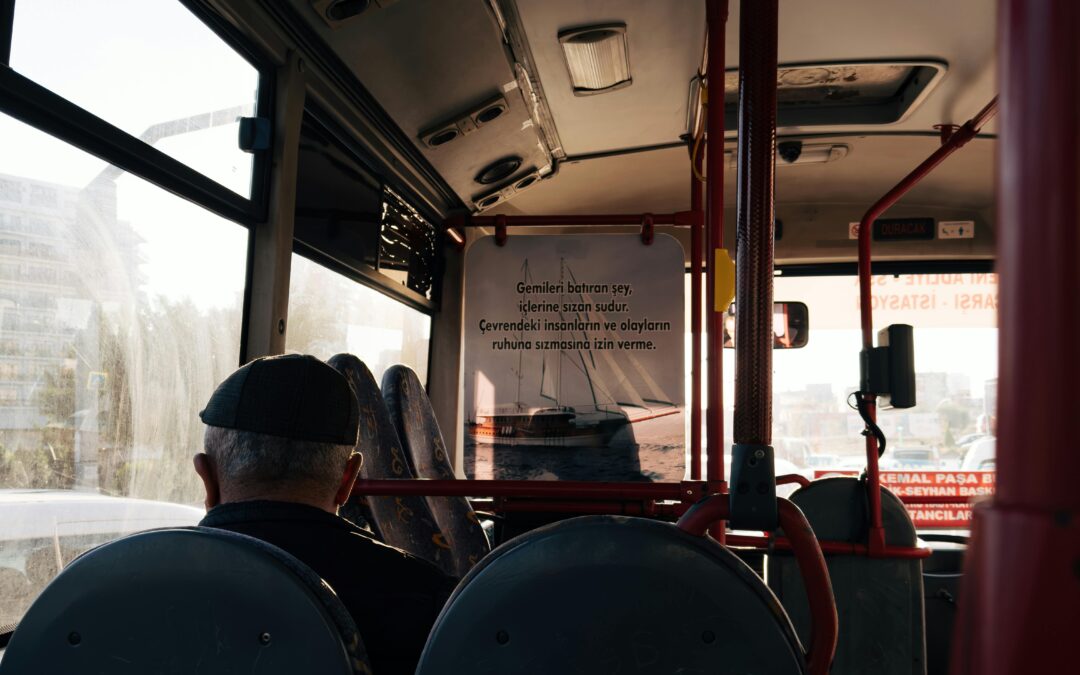
I had been granted an exception. Instead of having to take the school bus from high school in Vankleek Hill into Hawkesbury and changing buses at what used to be called Hawkesbury District High School, the school board had agreed to let the express school bus stop to let me off at my home on Highway 34 just outside of Hawkesbury.
A good thing, right? We lived at the bottom of the hill just across from what is now Stephanie’s. But it seemed to me that the bus picked up speed going down that hill before Stephanie’s. I would look ahead in the mirror above the bus driver’s head to see if the bus driver was looking back at me to acknowledge that I was on the bus. That would be my signal that he planned to stop the bus. I usually stood up early with my school books and tried to keep my balance, leaning backward as the bus careened down the hill. The driver often overshot our driveway. He would let me off on the highway and I had to walk back a ways to get home. That was okay. What bothered me were the three or four boys who sat in the front seats, looking back at me and laughing as the bus gathered speed and they knew it would not make the stop.
No matter how good a day it had been at school, this end-of-day embarrassment always awaited me. As I look back now, it seems like a small thing. But you know how it is in high school. Invisibility and looking like everyone else was a cloak of protection for shy teenagers like me.
I told no one about this daily thing that I dreaded at the end of every school day. One evening, I had an idea. I would talk to one of the boys who looked back at me and laughed every day. I would ask him if he would remind the bus driver to stop for me.
The next day, I did just that as I boarded the bus. Pierre listened and said nothing. Later, as the bus crested the hill and my house came into sight, I saw him tap the bus driver’s shoulder and say something to him. Pierre looked back at me and smiled. I felt the bus slowing down. Pierre continued to do this this every day if the driver was not slowing down. And so ends the story.
I saw Pierre decades later, helping a child in a wheelchair get out of a specially-outfitted van. He did so with care and patience.
That humanity was inside him all along–inside the teenage boy that I remembered as someone who laughed at me. I like to think that on that day so long ago, I faced my fear and asked him for kindness. By speaking to him, we connected. How could he turn down my request for help?
I believe that most people do want to get along and help each other. After all, it feels good to help someone. But it depends on how you look at things. Too often, collaboration feels like giving in and losing. No one wants to be a loser. I see this all the time in real estate negotiations. The buyer wants something. The seller wants something. If everyone wants the same thing, there is usually a way to make a deal work. How important is a $1,000 price reduction when we are talking about a 20-year mortgage? How happy will you feel when your home is sold — fast forward to appreciate that feeling and compare it to the inconvenience of fixing a broken window before closing the deal.
When we focus on the other party and think about them too much, we lose sight of our own needs. What will most help us get what we want?
I like to think of a real estate transaction like a bus. Are we all on the same bus or are we on two separate buses, heading in different directions?
Those many years ago on the school bus, I had set aside the notion of my peers laughing at me. I stopped thinking about them and thought about helping myself. I considered what I could do to change my day. I took a chance by asking for help. It might not have worked, but it did.
The best experiences for buyers and sellers (and in life) happen when there is good will on both sides. When buyers and sellers and their agents are all working for the same result, everything is possible and everyone wins.
Recent Comments